
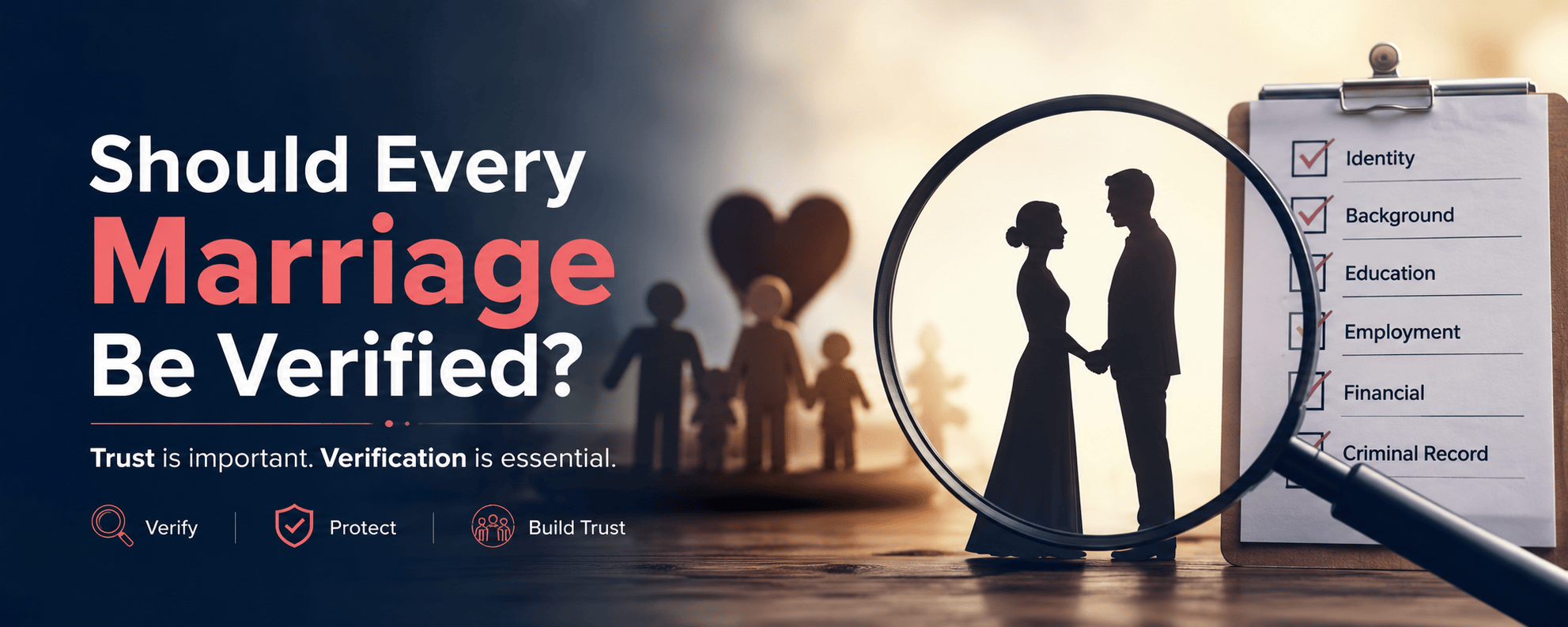
Should Every Marriage Be Verified?
Marriage is one of the most important decisions a person will ever make. It is a lifelong partnership built on trust, commitment, and shared values. Yet, one important question is often overlooked:
Should trust begin before verification—or after it?
Many families spend months comparing horoscopes, discussing wedding venues, and negotiating ceremonies. Ironically, they often spend very little time verifying the facts about the person their son or daughter is about to marry.
Blind trust has led to countless heartbreaks, financial losses, and, in some tragic cases, even crimes.
Trust Is Essential. Blind Trust Is Dangerous.
Trust is the foundation of every successful marriage. But trust should be based on truth—not assumptions.
Families frequently rely on:
- Recommendations from relatives
- Marriage bureaus
- Matrimonial websites
- Mutual friends
- Social media profiles
While these sources can introduce two people, they cannot verify whether the information provided is accurate or complete.
A polished profile, impressive photographs, and glowing references do not necessarily reflect reality.
Why Should Every Marriage Be Verified?
What Can Go Wrong?
Over the years, private investigators have encountered situations involving:
- Hidden previous marriages
- Undisclosed divorces
- Criminal backgrounds
- Financial liabilities and heavy debts
- Fake educational qualifications
- False employment claims
- Substance abuse problems
- Secret relationships
- Domestic violence history
- Misrepresentation of family background
Most individuals are genuine. However, when important facts are deliberately concealed, the consequences can affect not only the couple but both families for years.
Why Families Hesitate
Many people believe that conducting a pre-matrimonial investigation implies distrust.
It doesn’t.
When companies verify employees before hiring them, no one considers it offensive.
Banks verify borrowers before approving loans.
Educational institutions verify certificates before admissions.
Businesses conduct due diligence before signing contracts worth far less than the emotional and financial investment involved in a marriage.
So why should marriage—the most significant personal commitment of all—be the only major decision made without proper verification?
Verification Is About Protection, Not Suspicion
A professional pre-matrimonial investigation is not about spying or invading someone’s privacy.
Its purpose is to verify facts that have been voluntarily represented.
The objective is simple:
- Confirm identity
- Verify employment and profession
- Validate educational qualifications
- Understand reputation within the community
- Identify any serious criminal or financial concerns
- Ensure that major facts have not been concealed
When everything checks out, both families gain confidence and peace of mind.
The Emotional Cost of Not Verifying
A wedding lasts a day.
Marriage lasts a lifetime.
Unfortunately, many families only discover concealed information after the wedding—when emotional, social, and financial costs become much higher.
The consequences may include:
- Divorce
- Domestic disputes
- Financial fraud
- Emotional trauma
- Legal battles
- Loss of family reputation
Many of these situations could have been avoided through timely verification.
A Recommendation Is Not Verification
One of the biggest misconceptions is:
“Our relatives know the family.”
Recommendations are valuable.
Verification is different.
Even close relatives may not know about:
- Hidden debts
- Secret relationships
- Criminal records
- Addiction issues
- Previous marriages
- Workplace misconduct
Good intentions cannot replace verified facts.
Verification Protects Both Families
A pre-matrimonial investigation is not conducted only to identify risks.
It also protects genuine individuals from false allegations or misunderstandings.
When the information presented is accurate, verification strengthens trust and reassures both families that they are making an informed decision.
Before You Say “Yes”
Ask yourself:
- Have we verified the information?
- Are qualifications genuine?
- Is employment authentic?
- Has marital history been confirmed?
- Are there any serious legal or financial concerns?
- Do we truly know the person beyond social media and references?
If the answer to these questions is uncertain, verification may be one of the wisest investments you make.
Final Thoughts
Marriage should always begin with honesty.
Trust is beautiful—but trust becomes stronger when it is supported by verified facts.
A pre-matrimonial investigation is not about creating doubt.
It is about removing uncertainty.
Because when two families unite for a lifetime, they deserve the confidence that comes from knowing the truth.
Because trust is important but verification provides peace of mind.
👉 Call: +91-9810934570
👉 Visit: https://tridentspy.com
✔ 100% Confidential
✔ Trusted Investigation Services
✔ Quick & Accurate Reports

